Meet Shweta, RN, RPN
For more than 20 years, I have worked as a psychiatric nurse helping individuals navigate severe mental health struggles, crisis situations, and emotional distress across both the United Kingdom and Alberta.
When a woman is pregnant or caring for a newborn, sudden changes in hormones, exhaustion, and brain chemistry can feel completely overwhelming. Many mothers believe their worry, sadness, or panic means they are failing somehow. This is failure, it is a clear physical signal that your nervous system is overloaded and needs gentle, skilled clinical support.
I created Rapid Action Health to give mothers, partners, and healthcare providers a safe, fast bridge to care. We do not let families wait months in distress. We offer calm virtual check-ins, assess your symptoms, help you reset, review your medications, and stay in contact with your medical doctor or midwife.
Pregnancy is a joyous time but it can be a very challenging time as well. It can feel overwhelming and scary. Rest assured, you are not alone, with the right support, you will feel confident and empowered.
Caring for baby means caring for ourselves too!

Grounded in 20+ years of clinical mental health nursing—and guided by the heart of family.
Insights on Perinatal Mental Health
Evidence-Based Education

Why Postpartum Anxiety Is a Physical Nervous System Alarm?
Racing thoughts and sudden feelings of panic after childbirth are not always just ordinary worry. Major hormonal changes and broken sleep can affect how your brain and body respond to stress. When you are constantly waking up to care for your baby, your nervous system may struggle to re-settle, leaving you feeling on edge, tired, overwhelmed, or unable to relax even when everything seems fine.
Clear, trauma-informed guidance on neurobiology, hormonal transitions, and clinical recovery for parents and healthcare providers.
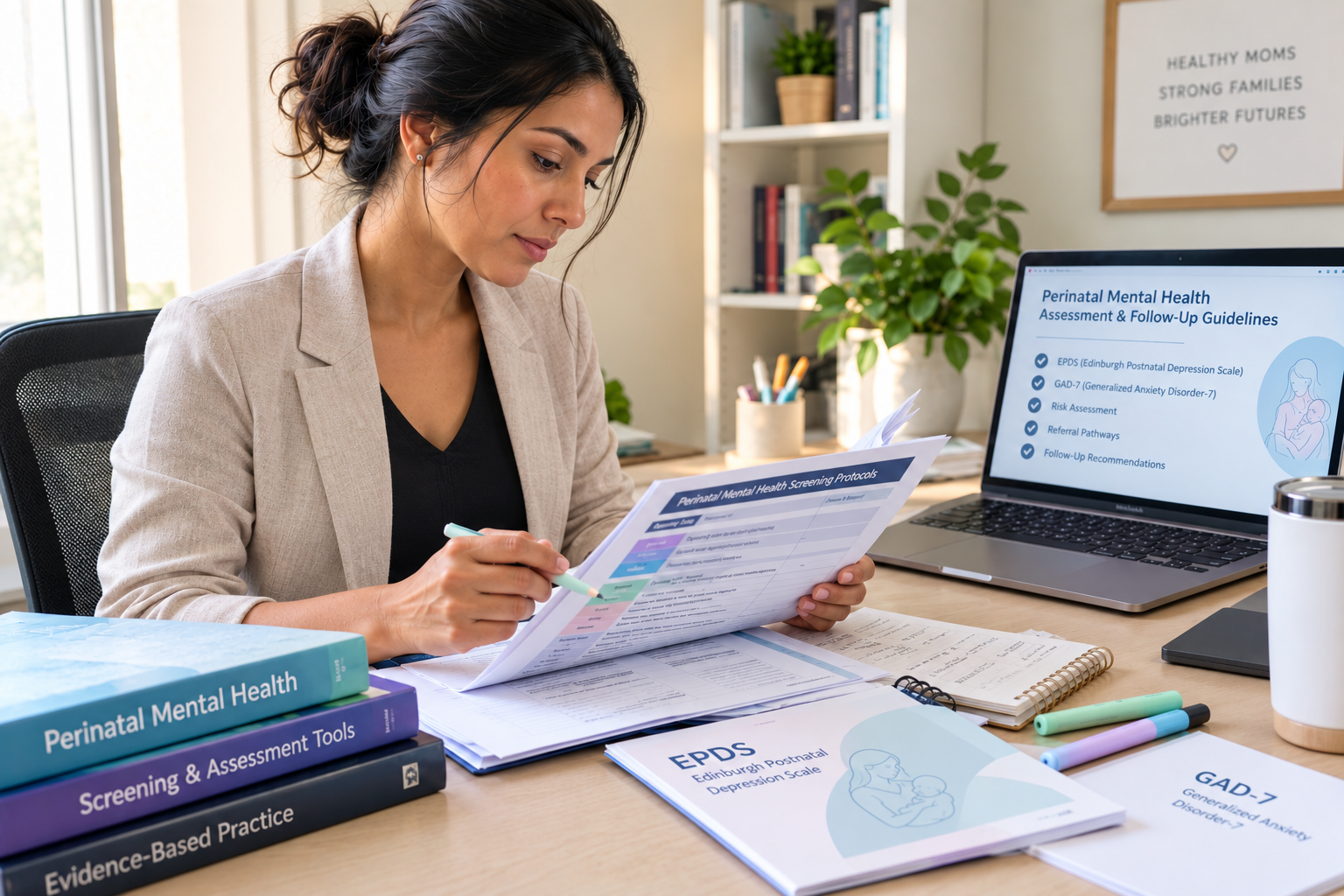
The Perinatal Screening Timeline: Why Tracking Matters Up to 1 Year
Perinatal mood and anxiety disorders can develop at any time during pregnancy or throughout the first year after childbirth. Symptoms may include persistent sadness, excessive worry, racing thoughts, irritability, or feeling overwhelmed. Learn how evidence-based screening tools can help identify symptoms early, assess their severity, and guide appropriate support and follow-up care.

Beyond "Helping with the Baby": What Partners Need to Know
Mom’s mental health recovery doesn’t happen in isolation, it is shaped by the support she receives at home. Partners and family members can play an vital role by helping out for uninterrupted sleep, sharing baby care and household responsibilities, and recognizing early signs of emotional distress. Learn practical ways to support a mom’s recovery, create a safe, caring home environment where both mom and baby can thrive.
Frequently Asked Questions
Practice TransparencyCommon inquiries regarding insurance coverage, nursing scope, physician coordination, and clinical timelines.
-
Private virtual RN/RPN sessions are not covered by Alberta’s public health plan (AHCIP). Some extended health plans may reimburse nursing services. Please confirm your coverage and limits with your Health Insurance provider.
-
No. Rapid Action Health provides psychiatric nursing support, including medication reconciliation, tolerance and side-effect monitoring, and prescriber advocacy.
When medication changes are needed, we share clinical observations with your physician, psychiatrist, or midwife to support safe, informed decisions.
-
We use a closed-loop co-care model. After your initial assessment, we send a standardized one-page clinical summary to your primary care clinic within 48–72 hours, with your consent, keeping your care team informed of your care and recovery plan.
-
Rapid Action Health is a virtual outpatient nursing service, not an emergency or 24/7 crisis service.
For immediate risk of harm, postpartum psychosis, or medical emergencies, call 911 or go to the nearest ER. For Access 24/7 mental health support in Alberta, call 780-424-2424